
Objective:
By the end of the training course, trainees will be able to:
- Learn the fundamental of Six – Sigma project.
- The personnel requirements in Six – Sigma project team.
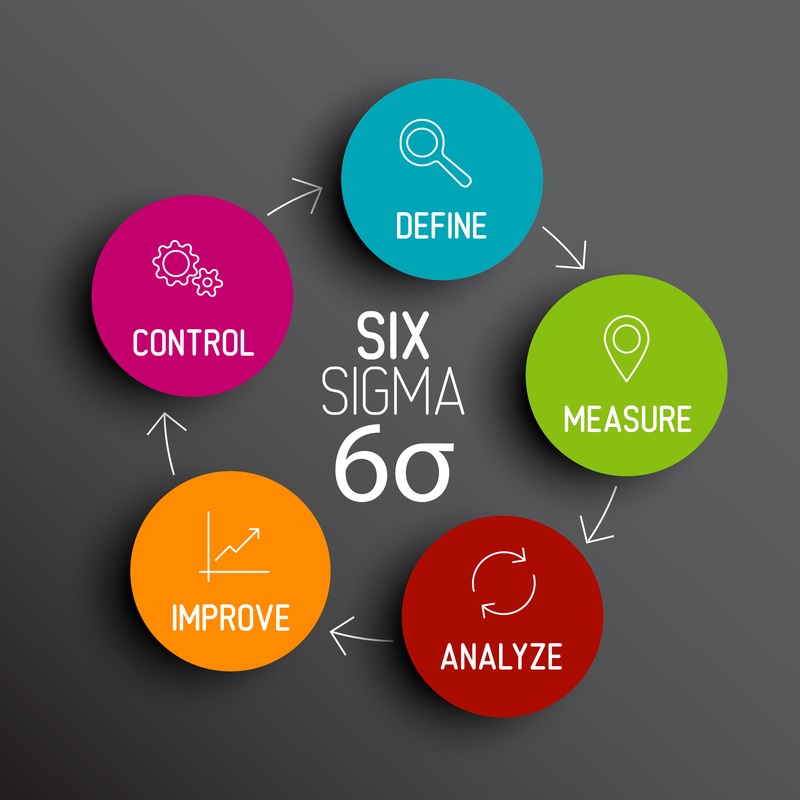
- Use DMAIC Six – Sigma methodology to Define, Measure, Analyze, Improve and Control the production processes.
- The Statistics Tools in Six – Sigma.
People concerne:
Technical and quality staff in factories
Prerequisites:
Statistical background.
Content:
| A. General
– Fundamental of Six – Sigma projects within organization – Relationship with quality management standard ISO 9001. – Maturity of process of an organization. – Voice of customer & accountability. B. Six Sigma infrastructure within an organization – Larger – over 1000 employee at a site – Medium – 250 to 1000 employees at a site. – Small – Less than 250 employees at a site. C. Six – Sigma Personnel and their roles – Minimum competence required – Champion – Deployment manager – Project sponsor – Master black belt – Black belt – Green belt – Yellow belt D. Six – Sigma Project prioritization and Selection – General considerations – Project prioritization – Project selections E. Six – Sigma DMAIC methodology – Define, Measure, Analyze, Improve & Control phases. F. Statistics tools in Six – Sigma project (DMAIC – Algorithms) I. Assessment of the product quality (target of Six – Sigma Project) – Defect per million opportunities – Rolled throughput yield . – Return rate . – On-time delivery – Cost of poor quality . II. Assessment of the precision of the production process [ISO 5725 based] – Determination of sample size. – Graphical representation of data: Box-plot, Multiple comparison of means for data representation. – Probability-plot, kernel function representation, and normality test. – Evaluation of repeatability and reproducibility in the production process. – Gauge R&R analysis III. Controlling and minimizing the out-of-quality product [ISO 7870 based] – Process adjustment control chart, – Trend control chart – Control chart for coefficient variation – Attributed – np, p, c, u control charts. |